
Thiamidol Review: Is the Patented Ingredient Actually Worth Trying?
I tested Eucerin's Thiamidol serum for a month. Here's what the science says about this patented ingredient for hyperpigmentation, plus my honest experience fading post-acne marks.
If you deal with hyperpigmentation, you already know how relentless it can be. You’ve probably tried all the popular ingredients—vitamin C, azelaic acid, tranexamic acid, the list goes on—and progress may still be slow. Painfully slow. The frustrating truth is that there’s no silver bullet that can magically fix hyperpigmentation. Most dermatologists will tell you it takes a combination of actives, consistency, and time. And even then, figuring out which combination actually works for your specific skin type can be extremely confusing.
Entering this already chaotic ring is Thiamidol. A fairly new, patented brightening ingredient, exclusively available in two brands, making some very bold claims. But do the results live up to the hype, and is it actually worth adding to an already complicated routine? That’s what I set out to find out by digging into the research and then trying it myself for a month.
What is Thiamidol?
Thiamidol, chemical name isobutylamido‑thiazolyl‑resorcinol (we’ll stick with the brand name for the sake of our sanity) is a patented skincare ingredient developed by Beiersdorf, the parent company of brands like Eucerin and Nivea.
The last part of its chemical name, resorcinol, is actually a clue as to how the ingredient works. Resorcinol and its derivatives have been used in dermatology and skincare for years because they can help inhibit tyrosinase, the key enzyme involved in melanin production. Other popular brightening ingredients like alpha arbutin, kojic acid, and even hydroquinone all work the same way too.
While Thiamidol belongs to this broader resorcinol family, it was specifically engineered to be “exceptionally effective against human tyrosinase” (a claim made by the brand, not by me). According to Beiersdorf’s research, the company screened tens of thousands of molecules before identifying this particular structure as the most promising candidate.
What Does the Research Say?
Surprisingly, the research says quite a lot. Unlike many cosmetic ingredients that rely on small or poorly designed studies, Thiamidol has been tested in multiple clinical trials across different types of pigmentation. Research shows that Thiamidol can significantly improve several common pigmentation concerns, including:
Post‑inflammatory hyperpigmentation (PIH)
Melasma
Sun spots
In one randomized split‑face clinical study comparing Thiamidol with hydroquinone, women with mild to moderate melasma were treated with either 0.2% Thiamidol or 2% hydroquinone on opposite sides of their face for 12 weeks. Both sides improved significantly, but after 12 weeks, the Thiamidol-treated side showed better improvement. For people dealing with post-acne marks, there's a 2021 study that tested Thiamidol specifically on PIH in darker-skinned individuals. After 12 weeks, the melanin index of treated lesions dropped significantly.
There’s also growing professional recognition of the ingredient. A global panel of dermatology experts recently identified Thiamidol as a first‑line dermocosmetic ingredient for facial hyperpigmentation, reflecting strong consensus about its effectiveness and safety.
That’s a pretty strong endorsement. So what’s the catch?
Here’s the Catch.
At this point, you might be wondering why Thiamidol isn’t one of the most famous ingredients on the planet for hyperpigmentation. I don’t blame you. The one catch with this seemingly brilliant ingredient is that it's patented, which means most of the research comes from the same place.
Beiersdorf AG own it, they control it, and most importantly, they are the ones funding the research on it. That doesn’t automatically invalidate the research (unfortunately skincare research is usually only viable for parent companies to conduct, and the studies have been published in legitimate scientific journals). But it does mean we should interpret the results with a little caution.
So, with that caveat in mind, I decided to test out Thiamidol for myself.
My Honest, Non-Sponsored Review of Thiamidol
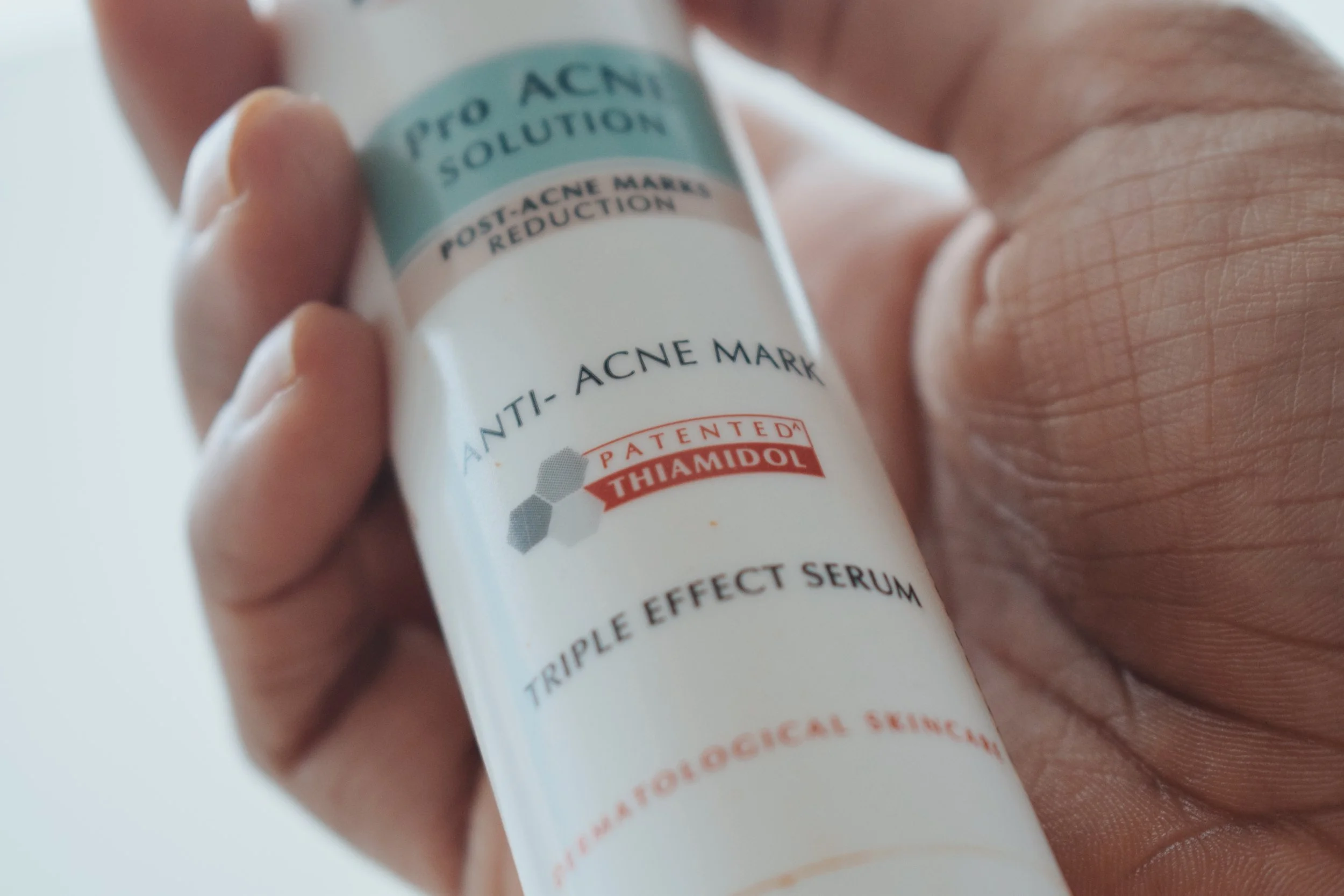
I recently tested Thiamidol myself through the Eucerin Pro Acne (also known as DermoPure in some markets) Triple Effect Serum, which I purchased with my own money, so you know this is a completely honest and unbiased opinion.
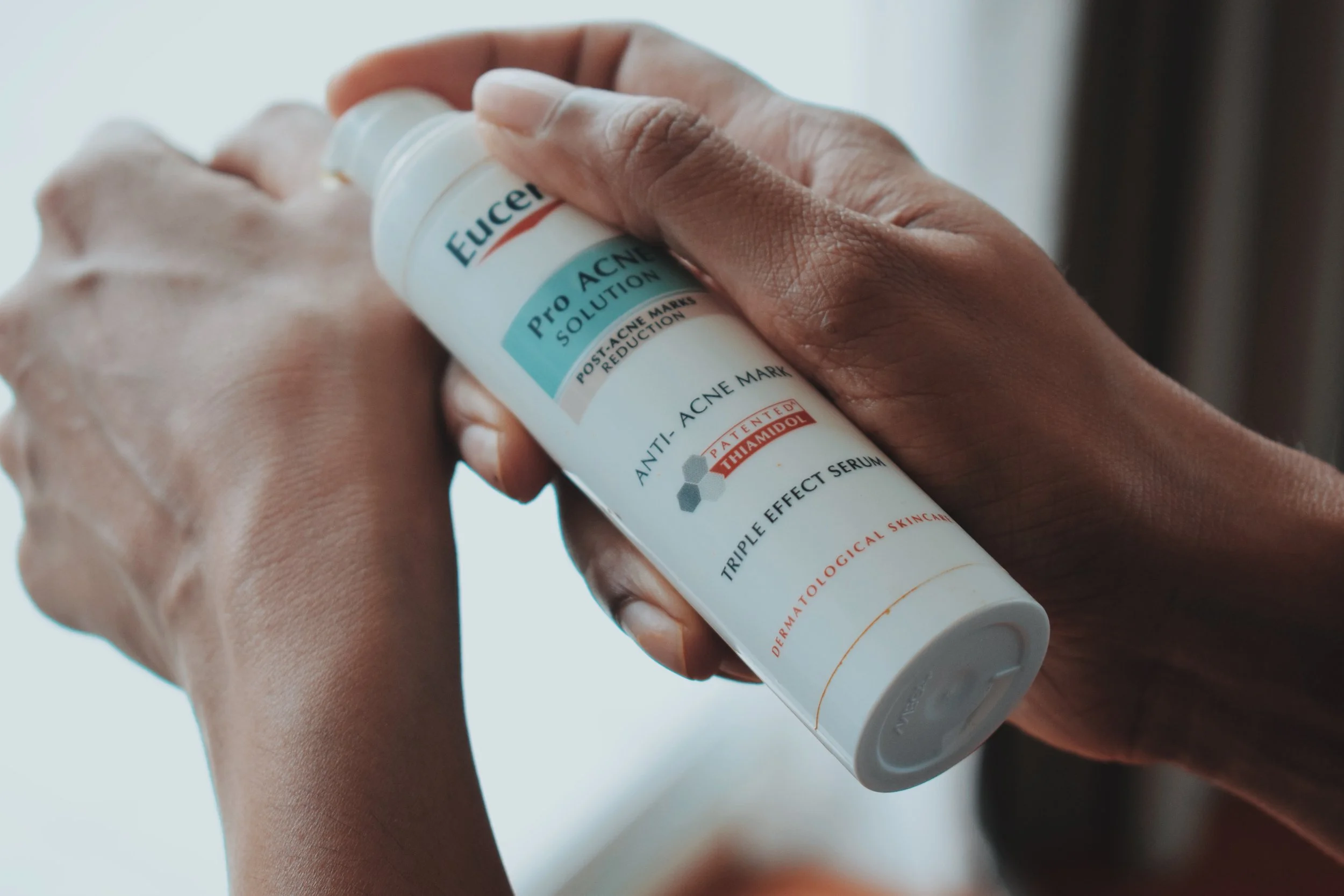
This is one of the brand's acne-focused products that contains Thiamidol specifically to target post-inflammatory hyperpigmentation. It also contains salicylic acid for texture and breakout management, and panthenol for hydration and protection. As someone with oily, clog‑prone skin, I’m often plagued by random little breakouts, and I just happened to be dealing with a big ol’ pimple along my jawline when I bought this. Unfortunate for my jaw line, but perfect timing for this little test I planned to run.
How I Used Thiamidol in My Routine
For this experiment, I used Thiamidol daily, once a day, in my morning routine. I have seen people recommend using it twice a day for best results, but I use prescription tretinoin at night and didn’t want to risk mixing the two together.
Which brings me to another point, and this is important, because while I was testing out thiamidol specifically, I was still continuing to use my other brightening actives. For me that includes a vitamin C serum every morning, prescription tretinoin on alternate nights, and azelaic acid on the other alternate nights. As I said at the start of this article, hyperpigmentation is complex and can rarely be faded with just one product. Here I’m testing the additive effects of thiamidol to my existing brightening routine rather than its individual impact.
First Impressions
While the texture of this serum is pretty lightweight, and absorbs quickly, my first impression was slightly coloured by how heavily fragranced it is. It does also contain quite a bit of alcohol (I felt like I could actually smell it, that’s how much there was), and the addition of salicylic acid made it very drying. So the overall experience of using the product wasn’t exactly pleasant.
In fact, after a couple of days of applying the product all over my face, I actually decided it would be better to use it as a spot treatment only on the impacted area rather than subject my whole face to this experience. But, experience aside, it’s the results we care about on this blog. And so on we go to the part that actually matters.
My Results After 4 Weeks
Over the last 4 weeks, I’ve been documenting this one pesky little spot on my jawline to show you the difference. Here’s the picture evidence first for you to form your own opinion, before you read mine.
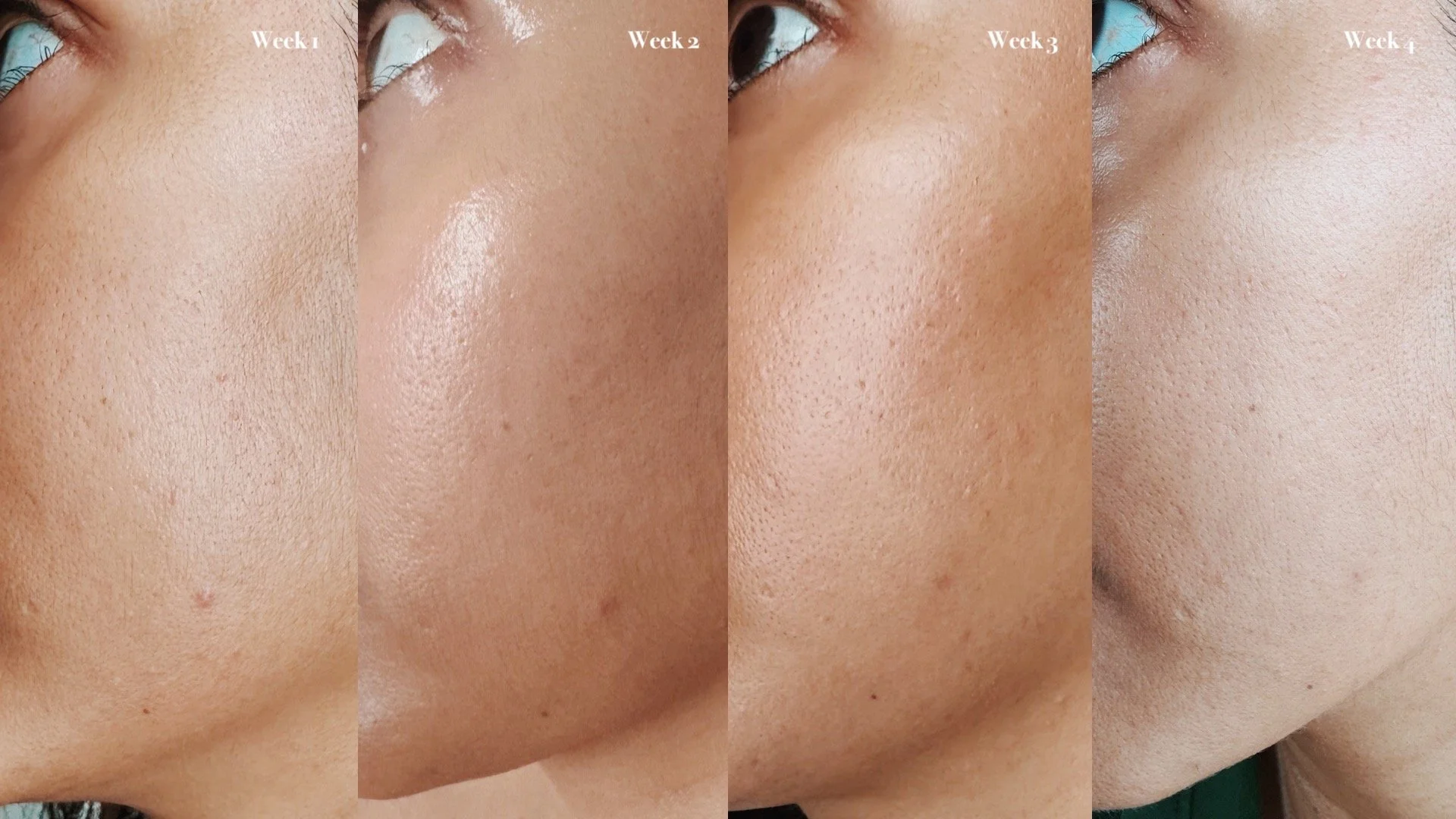
First, let me address the obvious. Yes, the lighting differs a little in these photos, I wanted to use natural light as much as possible and unfortunately, I can’t control the amount of sunlight I get. So, it is what it is. That being said, the results are still pretty clear to see.
Week 1: I started using the product when the pimple was still at a head, and hadn’t subsided yet. I’m not sure if that’s how it’s meant to be used, but my reasoning was that the salicylic acid in this product would exfoliate the pimple and help me get rid of it.
Week 2: It worked! The pimple flattened out in a week, but as expected, it left behind an unfriendly little black spot. However, I’ve had much worse looking PIH in the past, so I think using the thiamidol on the unhealed pimple may have prevented the PIH from getting too bad.
Week 3: To the untrained eye, week 3 may not look much better than week 2. But for someone who’s been through this tens of times before, I could tell that the spot was already starting to fade. The clue is in the blurry edges. For me, spots always fade from the outside in (the nucleus being the hardest to fade). In week 3, I could already tell that the edges were starting to soften and fade.
Week 4: Not completely gone, but still, quite a significant improvement in a relatively short period of time. This definitely came as a surprise because, in my experience, pimples like these usually leave behind angry dark spots which take a good few months to start fading. But here I was seeing significant change in just a matter of weeks!
All in all, I was pretty impressed with Thiamidol’s ability to fade this spot and I definitely plan to continue using and charting my progress.
One little caveat to add here is that I also tried using thiamidol on some older, more stubborn spots and didn’t see quite as dramatic results as the ones pictured above. Although, in all honesty, that was to be expected.
The Verdict: Should You Try Thiamidol?
I truly wish this wasn’t a patented ingredient, because I believe it would be a LOT more popular if it wasn’t owned by one brand. The current thiamidol-containing Eucerin and Nivea products on the market aren’t the most cosmetically elegant, however, the ingredient itself is very promising.
The most interesting thing about Thiamidol is that it’s a targeted ingredient with a clear mechanism of action that actually works. From my experience, it’s definitely effective on fresh dark spots and acne marks, but like any skincare ingredient, it works best when part of a bigger picture:
Make Thiamidol one part of a routine made up of other brightening ingredients like vitamin C and retinoids
Use it as a spot treatment on dark spots or acne marks, rather than all over your face
Never skip your sunscreen!
Have some patience (the least glamorous but most important step)
If you’re dealing with post‑acne marks or stubborn pigmentation, Thiamidol is definitely an ingredient worth keeping on your radar. Just don’t expect miracles overnight.

About The Skinimalist
Hi, I’m Mal, a 30-something recovering skincare addict, and this is my blog. A space where I attempt to de-influence you from chasing trends and buying more skincare products you may not need.
Related Posts:


I tested Eucerin's Thiamidol serum for a month. Here's what the science says about this patented ingredient for hyperpigmentation, plus my honest experience fading post-acne marks.