
Do At-Home LED Masks Work? I Tried the Project E Beauty LumaLux LED Mask to Find Out.
I tested the Project E LumaLux Face LED Light Therapy Mask for 30 days to find out whether at-home LED masks actually deliver the results they promise to. Here’s a deep dive into the science, my experience, and my 100% honest review.
You know the aesthetic. The gorgeous but overworked protagonist of a movie or TV show answering emails, making coffee, reorganizing her life, all while wearing a glowing LED mask. It's equal parts cool and terrifying. Yet also…undeniably intriguing?
Somehow LED masks have become the ultimate symbol of the busy girl self-care routine. And honestly? I get the appeal. It's pretty tempting to think that while you’re answering emails, doomscrolling, or watching Netflix, you could also be quietly stimulating collagen production and reversing the signs of stress and sleep deprivation.
Especially because the science around LED light therapy actually does sound pretty convincing, at least in clinical research. But can those same clinical benefits really be replicated by a mask on your face while you watch reality TV? That’s a little less clear. To find out for myself, I did a whole lot of research, and put the Project E LumaLux Face LED Light Therapy Mask on trial for 30 days. Here’s everything I found.
FULL DISCLOSURE: The lovely folks from Project E Beauty sent me this mask to try out, and I do make a small commission from any purchases through links on this page. However, as always, the thoughts below are all my own 100% unfiltered opinions, and reflect my actual experience with this product.
What is LED Light Therapy?
Before we get to my review, let’s talk about what LED therapy is all about, and what the research says about it. Unlike many skincare devices, LED (light-emitting diode) therapy wasn’t born in a skincare lab. It actually has its roots in space research!
That’s right, NASA scientists were exploring LED light back in the 1990s as a way to help stimulate wound healing and tissue repair in astronauts. Eventually, dermatologists got involved, and LED therapy started appearing in clinics as a treatment for:
Post-procedure healing
Acne treatment
Inflammation
Skin rejuvenation
In short, LED therapy is actual rocket science! But no, seriously, it does have a fairly decent amount of research behind it. The strongest evidence exists for red light and infrared light, with studies showing improvements in skin texture, elasticity, redness, and even fine lines over time. Blue light also has some evidence behind it for targeting acne-causing bacteria on the skin.

The big question is whether at-home masks can really replicate the same results . Most of the strong evidence for the efficacy of LED therapy comes from studies in controlled, in-clinic settings, using professional-grade devices with high energy output.
At-home masks, on the other hand, are playing in a totally different league. There’s also debate around how deeply they actually penetrate. Unfortunately, research on at-home devices is currently non-existent, so we’re mostly working with hypotheticals here.
That doesn’t mean they don’t work. It just means we need to do our research and manage our expectations, just a little.
And What’s With All the Different Colors?
Adding to the confusion is the sheer number of colours that LED masks come with. Sure, red is the most well-known, but blue, green, yellow, purple and others are also starting to become trendy.
Different colours correspond to different wavelengths and frequencies of light, which—in theory—are believed to trigger different biological responses. The problem is that not all of these wavelengths have the same amount of scientific evidence behind them. So, let’s quickly decode the LED rainbow:
🔴 Red light: This is the most researched wavelength for anti-aging benefits with evidence supporting collagen production, reduced inflammation, and improved skin texture over time
🟠 Infrared light: Also fairly well supported by research, with some research suggesting it may penetrate deeper into the skin than visible red light. It is often used for wound healing, inflammation reduction, and tissue repair support.
🔵 Blue light: While not quite as hyped as red light, blue light has reasonably solid evidence for acne treatment. It works by targeting acne-causing bacteria on the skin, and may help reduce inflammatory breakouts over time.
🌈 Yellow, green, purple and other coloured lights: This is where things start getting a little murkier. Brands often claim benefits like pigmentation reduction, calming redness, or brightening, but compared to red and blue light, there’s significantly less robust clinical evidence supporting these claims. In many cases, these extra colours feel more like marketing add-ons than clinically proven necessities
How to Choose the Right LED Mask
All that leads us to the big question: which is the right mask for you? With the overwhelming number of options on the market now (all at quite a hefty price tag, might I add), there are a few things to look out for when choosing an LED mask:
Wavelengths: This is THE most important factor to look out for in your LED masks. Only choose masks that disclose the wavelength of their red and/or infrared light. Red light should be in the ~630–660 nm range, and infrared in the ~830–850 nm range.
Energy output (or irradiance): This determines whether the light is even powerful enough to do anything meaningful. Unfortunately, many brands either don’t disclose irradiance at all, or use vague marketing language instead of actual measurements. Brands that do disclose irradiance are far more trustworthy, in my opinion. As a rough guideline, many experts suggest looking for at-home masks with irradiance levels somewhere around 20–50 mW/cm².
Unbiased reviews: At the end of the day, good ol’ user reviews are always a helpful resource for any decision like this.
I had my own shortlist of brands that met all these criteria, but as mentioned earlier, the kind folks at Project E Beauty happened to send me their LumaLux LED Therapy Mask to try out. However, as always, the thoughts and review below are unsponsored and reflect my honest experience with the product.
My Honest Review of the Project E LumaLux Face LED Light Therapy Mask
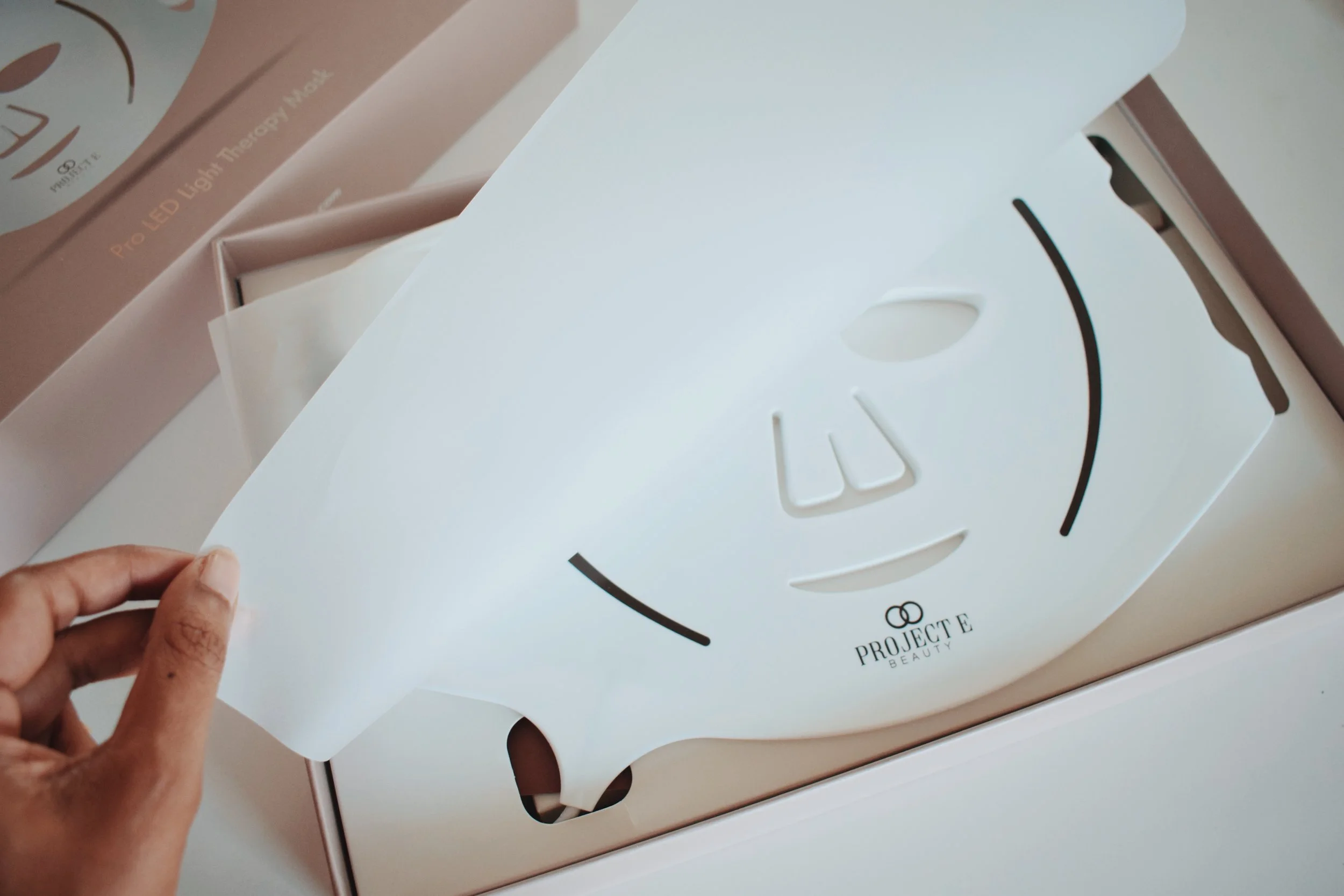
What I appreciate about Project E Beauty as a brand, is that theyvery transparent about light wavelengths, energy output, and number of LEDs (all of which are in the recommended range for the LumaLux Face LED Light Therapy Mask).
It does, however, come in an overwhelming number of colors (8!!), and I’ll be honest, even after more than a month of use, I haven’t gotten around to trying every one. The modes I tried most were the default (red + infrared + deep infrared) and the blue light mode. Here’s my full experience.
First Impressions
This is genuinely a good quality mask. Although it’s made of silicone, it feels sturdy and durable. Comfort-wise, the Project E mask was pretty decent. Not the lightest thing in the world, but still, comfortable enough. The fit wasn’t perfect at first, and required some adjusting, on my part, but I got there in the end.
(I apologize in advance if the image below comes as a jump scare).
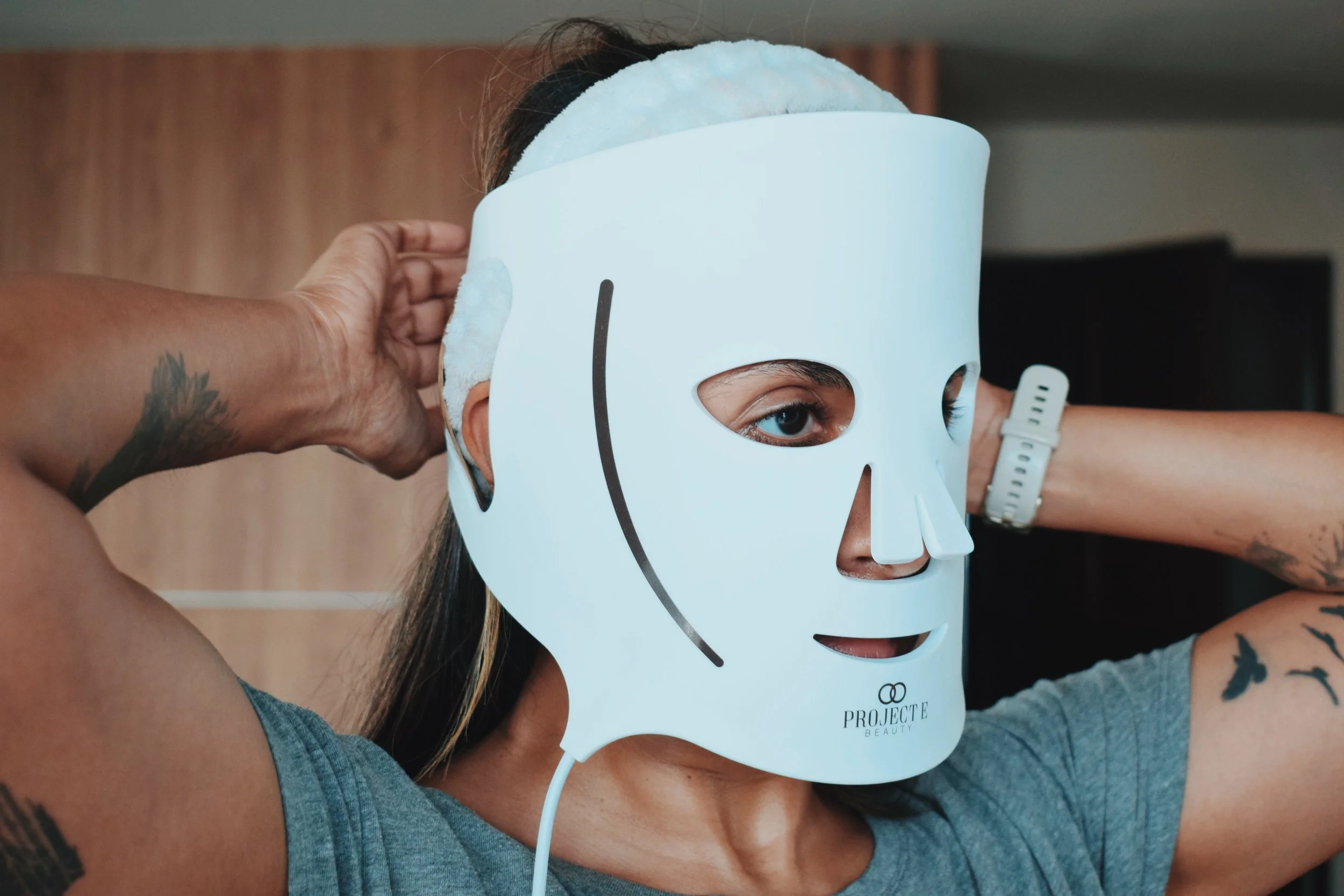
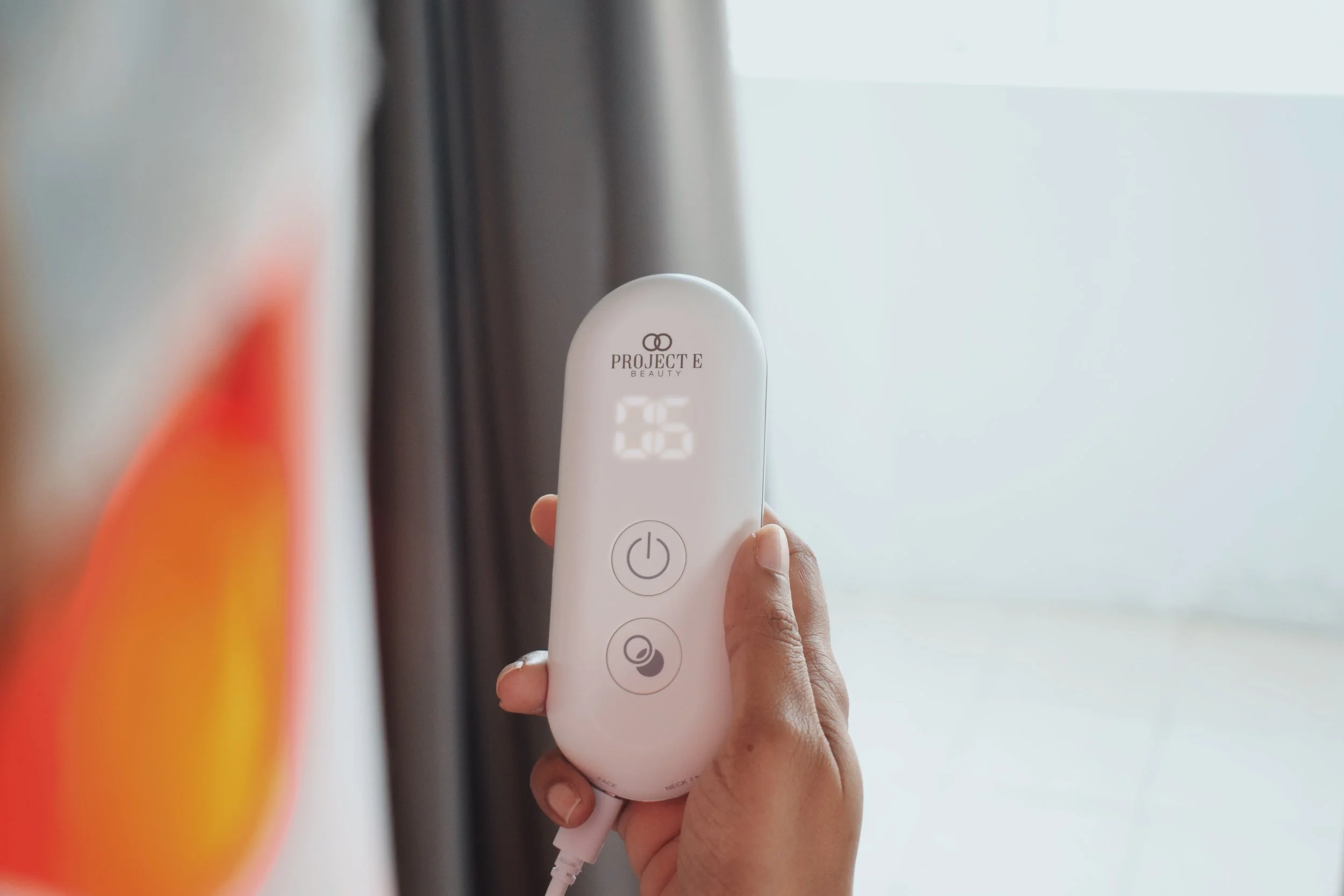
The first time I put the mask on, I genuinely had a moment of wondering whether I looked more like someone biohacking their skin or someone preparing for a role as a murderous villain in a horror movie. I swear my dog refused to come near me for a while after I put it on. Luckily the whole ordeal only lasted 6 minutes, because Project E Beauty only recommends using their mask 3-6 minutes a day, 3-5 times a week. I found these short sessions to be really easy to incorporate into my routine. The attached remote, with time and light controls, also made the product very intuitive to use.
I’ve seen other LED mask brands recommend longer usage durations of up to 10-20 minutes a day, and to be honest, the research is murky here. But for the purposes of this experiment, I strictly followed the usage directions from Project E Beauty.
The Experience
One thing I will say in favour of LED masks is that they’re incredibly easy to stick with. Unlike some skincare devices that require gels, prep steps, or complicated instructions, LED masks are refreshingly low effort.
You just strap it on for a few minutes and voila, you’re done! For best results, and deeper penetration, it’s recommended to use the mask right after cleansing and before applying any skincare that may prevent your skin from absorbing the light.
My Results After 30 Days
During my 30 day trial period, I alternated between the default red light mode and the acne-targeting blue light mode, depending on what my skin needed on any given day. I have to admit that the treatment I saw most immediate and pretty impressive results from was the blue light therapy mode.
Below, you’ll see 2 images of a monstrous little breakout on my chin, taken just 7 days apart. Using the mask 5 out of the 7 days, I wasn’t just able to calm down this raging pimple, I also felt like the mark it left behind was a lot less dramatic than what my hyperpigmentation-prone skin is usually used to.
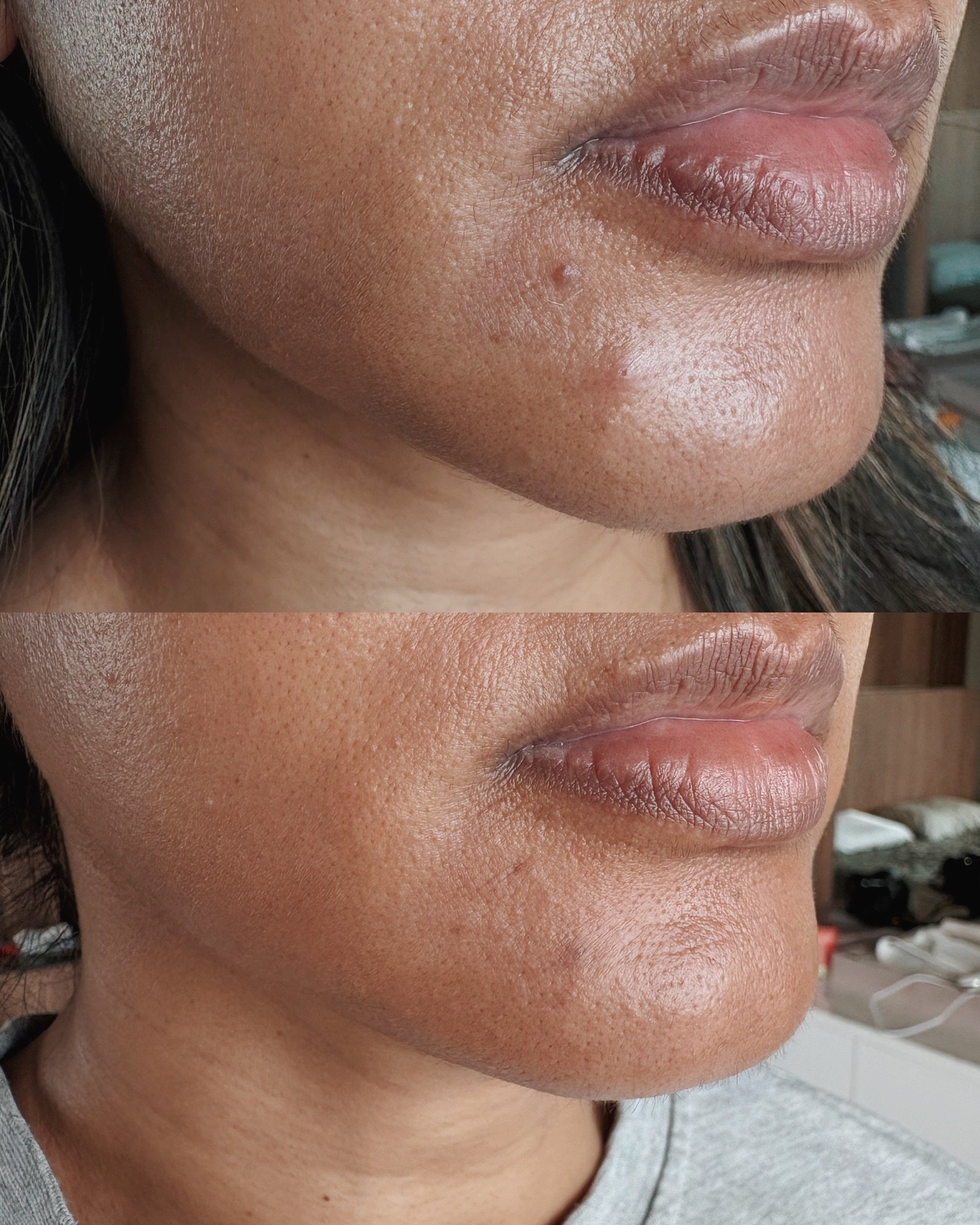
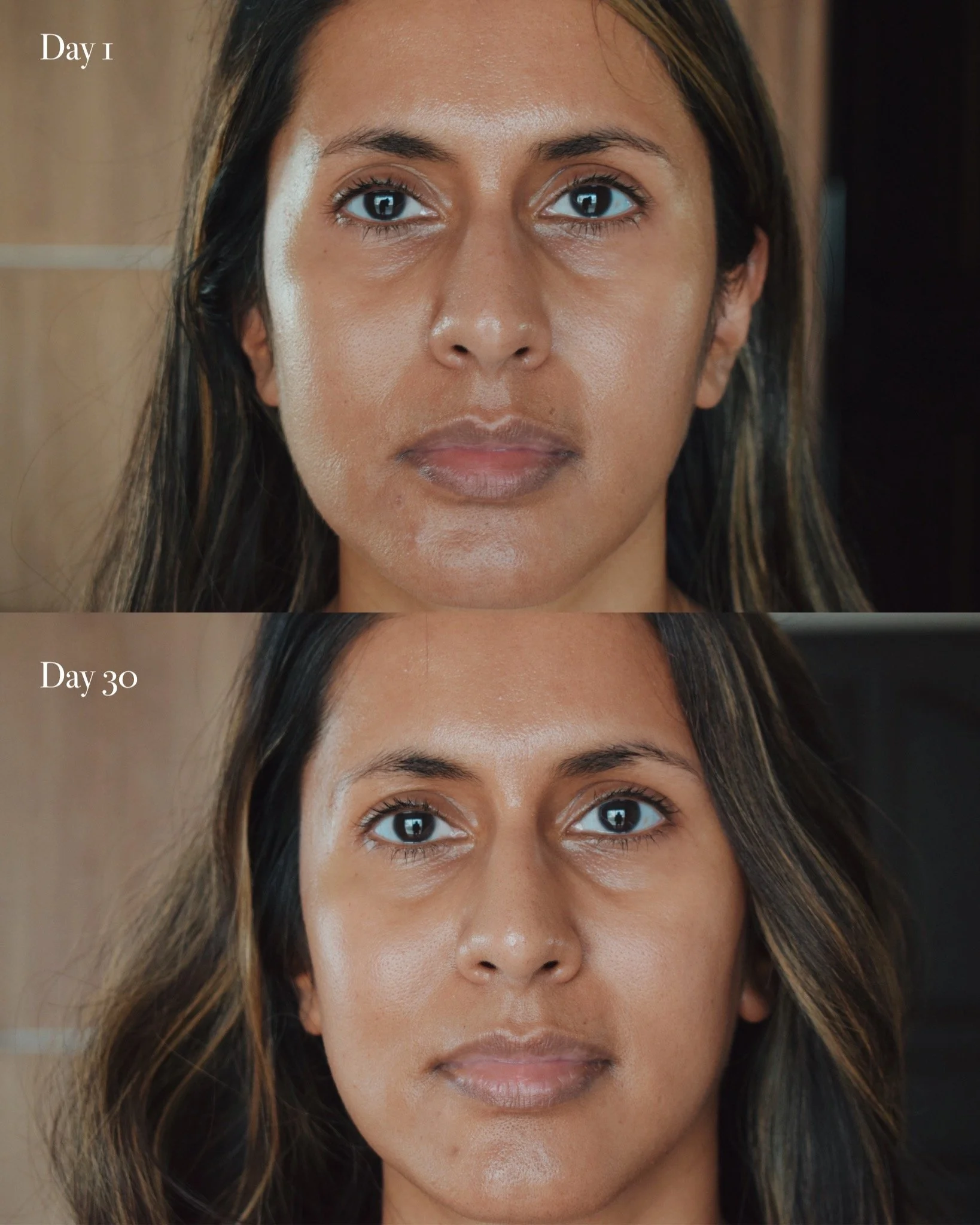
As for overall anti-aging benefits…well, you can have a look at the day 1 v/s day 30 image below to make up your own mind. I do think it was doing something. Just not in the dramatic, transformational way social media sometimes makes it seem.
The biggest thing I noticed was that my skin looked a little calmer and more even overall. I had less visible redness, my skin tone looked slightly more uniform, and there was this subtle “my skin looks pretty decent today” effect that’s hard to quantify but noticeable enough that I kept reaching for the mask.
What I didn’t experience was some overnight anti-aging miracle. My fine lines did not disappear. My pores did not suddenly shrink into another dimension. I did not wake up looking like I’d discovered immortality.
Final Verdict: Are LED Masks Worth It?
After 30 days of testing, I think my overall feelings about at-home LED masks can best be described as cautiously optimistic.
The pros are that they’re relatively low-risk in terms of skin irritation, easy to use, and backed by at least some legitimate scientific research. With the Project E mask, especially, the 3-6 minutes of commitment a few times a week, was fairly easy to make.
But it’s equally important to acknowledge that results are slow, subtle, and not as dramatic as social media often makes them seem. They also require a pretty high level of consistency to maintain, and I don’t think they’re a replacement for foundational skincare habits like sunscreen, retinoids, or simply getting enough sleep and hydration.
Ultimately, I don’t think an LED mask is something you need. But if you enjoy skincare as a ritual, are curious about beauty devices, and are willing to commit to long-term use for gradual improvements, I am definitely on the side of recommending them.
Unlike some of the other devices I’ve reviewed in the past, this is one that I’ve actually continued using long past the 30-day trial period and I can see myself continuing to use in the future. If you’re interested in trying it for yourself, use my discount code SKINIMALIST15 at checkout to get 15% off your order!

About The Skinimalist
Hi, I’m Mal, a 30-something recovering skincare addict, and this is my blog. A space where I attempt to de-influence you from chasing trends and buying more skincare products you may not need.
Related Posts:


I tested Eucerin's Thiamidol serum for a month. Here's what the science says about this patented ingredient for hyperpigmentation, plus my honest experience fading post-acne marks.